
"Part 5: Monetising O&M and Turning Support Liabilities into Recurring Revenue"
Welcome to the fifth and final installment of our series: Beyond the Battery Boom. Over the last four chapters, we’ve covered the shift to fleet operation, the necessity of a Minimum Viable Dataset, the reality of VPP control contracts, and the execution of strict remote triage sequences. Today, we confront the ultimate commercial reality facing the Australian solar industry: traditional, reactive diagnostic inefficiency is actively destroying installation margins. To scale sustainably, installers must transform their post-sale service operations from a cost center into a predictable, recurring revenue stream.
Series Directory:

The Financial Drain of Reactive Maintenance
The prevailing service methodology across the Australian solar and storage sector is fundamentally broken because it is inherently reactive. The workflow follows a predictable, margin-draining pattern: a customer notices an underperformance symptom or an error code on their native app, grows frustrated, and contacts the installer to demand an on-site inspection.
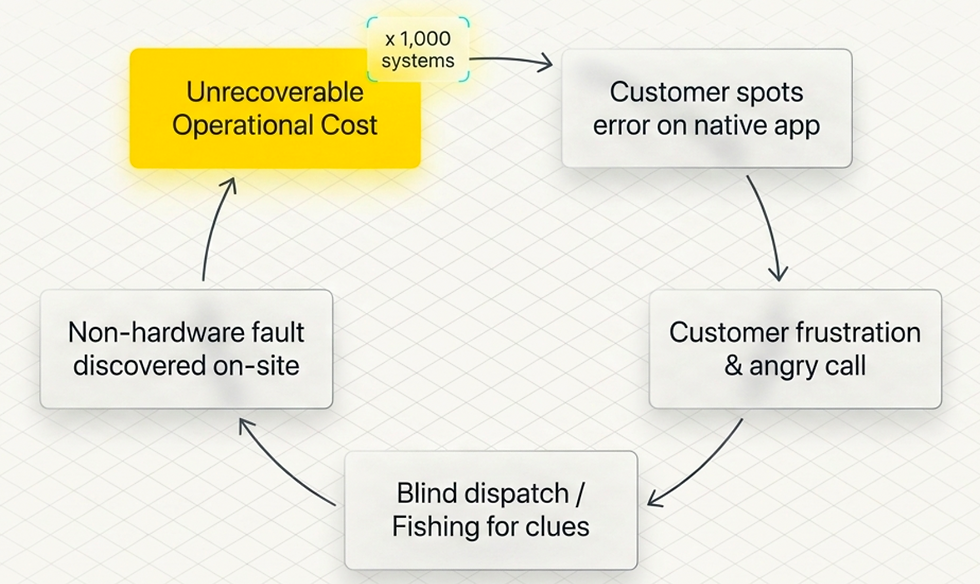
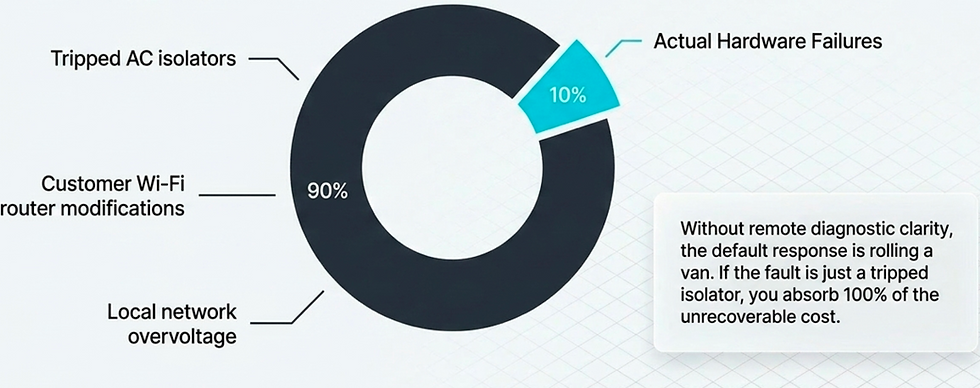
Without centralised, remote diagnostic clarity, the installer defaults to rolling a van. If that physical truck roll reveals that the underlying fault was simply a tripped AC isolator, a customer-initiated Wi-Fi router modification, or local network overvoltage, the installer absorbs significant, unrecoverable operational costs. As your deployed asset fleet scales over a 10-year warranty horizon, this compounding reactive overhead ceases to be a minor nuisance, it becomes a critical, structural threat to business solvency.
Moving to Predictive Asset Management
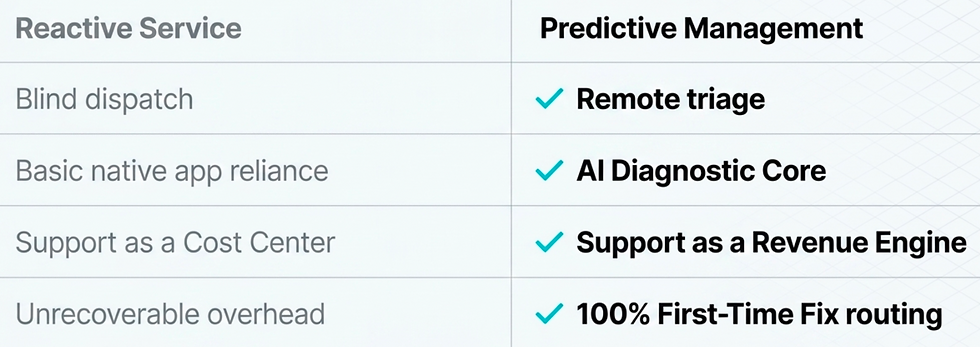
Transitioning away from this reactive loss-loop requires a fundamental architectural restructuring of your service desk. By migrating operations onto SolYield, asset managers move from blind firefighting to automated, predictive asset management. The platform achieves this via two primary core operational engines:
Weather-Adjusted Loss Quantification
Standard manufacturer monitoring dashboards only alert you after a total system blackout occurs. SolYield’s AI Diagnostic Core goes significantly deeper by overlaying static physical site models with real-time, localized weather and satellite irradiance APIs.

By calculating what a system should be producing under exact local weather conditions versus its actual real-time output, the platform performs highly precise, weather-adjusted loss quantification. This engine automatically detects, isolates, and prioritizes over 40 distinct system issues, pinpointing exact performance killers before they cause total system failure, including:
DC string voltage mismatches
Bypass diode failures
Insulation and isolation resistance faults
Inverter thermal stress and thermal throttling limitations
Automated Workflows and First-Time Fix Routing
When a physical truck roll is genuinely unavoidable (such as a validated hardware failure), sending a technician out to "fish for clues" is an expensive mistake.

When SolYield detects a definitive, unresolvable physical fault, its integrated workflow management system instantly generates a comprehensive diagnostic ticket. This ticket documents the exact nature of the fault, localised electrical data anomalies, and the active equipment warranty status. Your field technicians arrive on-site armed with the exact component diagnosis and the precise replacement parts required, driving your first-time fix rate toward 100%.
Structuring Recurring Revenue through Branded AMCs
Once your business possesses automated, fleet-wide diagnostic capabilities, you can confidently stop giving away support for free. SolYield enables installers to seamlessly package their monitoring infrastructure into structured, branded Annual Maintenance Contracts (AMCs).

By shifting your customer base onto tiered, recurring service packages (e.g., Base, Standard, Premium AMCs), you transform an ongoing support liability into predictable, high-margin contract revenue. Customers willingly pay a recurring subscription in exchange for guaranteed proactive fleet monitoring, automated performance reporting, and prioritized remote support access.
Eliminating the OEM Negotiation Bottleneck
The secondary drain on service profitability is the time support staff spend arguing with manufacturer tech lines to approve an RMA. To solve this, SolYield automates the creation of Warranty Evidence Packs.

If a battery asset's State of Health (SOH) degrades prematurely, your team can instantly export a standardised, bulletproof PDF report containing comprehensive time-series performance data, internal temperature logs, and lifetime throughput evidence. Presenting undeniable, clear data evidence to OEMs cuts through weeks of administrative negotiation, securing immediate replacement authorisations and dramatically reducing administrative labor costs.
The New Era of Solar Operations
The Australian solar companies that survive and thrive over the next decade will not be those who sell the fastest or the cheapest. They will be the mature fleet operators who understand that a deployed system is an asset that must be monitored, optimised, and commercialised over its entire lifecycle.
By leveraging SolYield to automate remote triage, quantify hidden losses, optimise field dispatches, and anchor recurring AMC programs, you insulate your business from operational drag and unlock the true profit potential of the battery boom.

Ready to turn your support division into a high-margin revenue engine? Book a technical platform demonstration with the SolYield engineering team today.
Navigating the solar market requires the right tools and insights. SolYield Software empowers solar professionals to automate operations, maximise customer satisfaction, and grow their business profitably with confidence. If you’d like to learn more or schedule a demo, contact us @ info@solyield.com


Comments